Burst Pipe Water Damage in Guelph
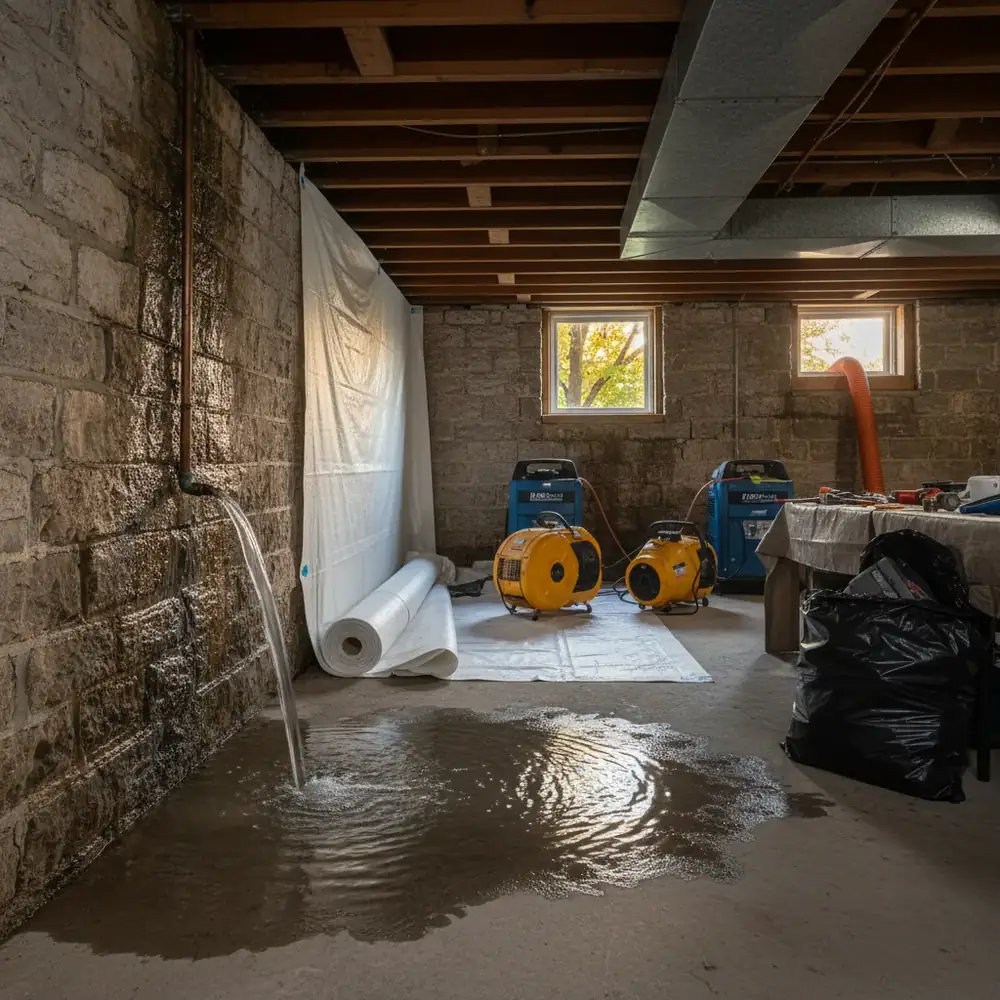
A 1/2-inch supply line dumps roughly 50 litres a minute. By the time you've found the shut-off, water has run through floor assemblies, down wall cavities and pooled on the lowest level. Guelph's deep-freeze snaps make late January and February peak burst season — usually pipes in exterior walls, garages and uninsulated bulkheads.
The process: stop the water, map how far it travelled with moisture meters and thermal imaging, open up only what's actually wet, and dry the assembly properly. Slow hidden leaks (the brown ceiling stain that keeps growing) get the same treatment — found and fixed at the source, not painted over.
- Thermal imaging + moisture mapping to find the real spread
- Targeted opening of ceilings/walls — no unnecessary demolition
- Coordination with a licensed plumber for the repair itself
- Full drying verification before closing up
What it costs in Guelph
- Single-room pipe leak dry-out: $1,000–$2,500
- Multi-floor burst (typical frozen-pipe scenario): $3,000–$10,000
- Thermal/moisture leak investigation: $250–$450, credited if we do the work
- Sudden pipe failures are among the most commonly covered insurance claims
Burst & Leaking Pipe Response FAQs
Where is my water shut-off?
In most Guelph homes: in the basement on the street-facing wall, near the water meter. Every adult in the house should know where it is — finding it during a burst costs you hundreds of litres.
How do I keep pipes from freezing again?
Insulate runs in exterior walls and garages, keep cabinet doors open on cold snaps for under-sink pipes on outside walls, and never set the thermostat below ~13°C when away in winter.
The ceiling has a water stain but it's dry now — am I fine?
Maybe not. Intermittent leaks (shower pans, pipe joints) wet the cavity repeatedly and grow mould between events. Worth a moisture scan before you repaint.
Do you fix the pipe too?
The plumbing repair itself is a licensed plumber's job — we work alongside one and handle everything around it: access, dry-out, and restoration.