Mould Remediation in Guelph
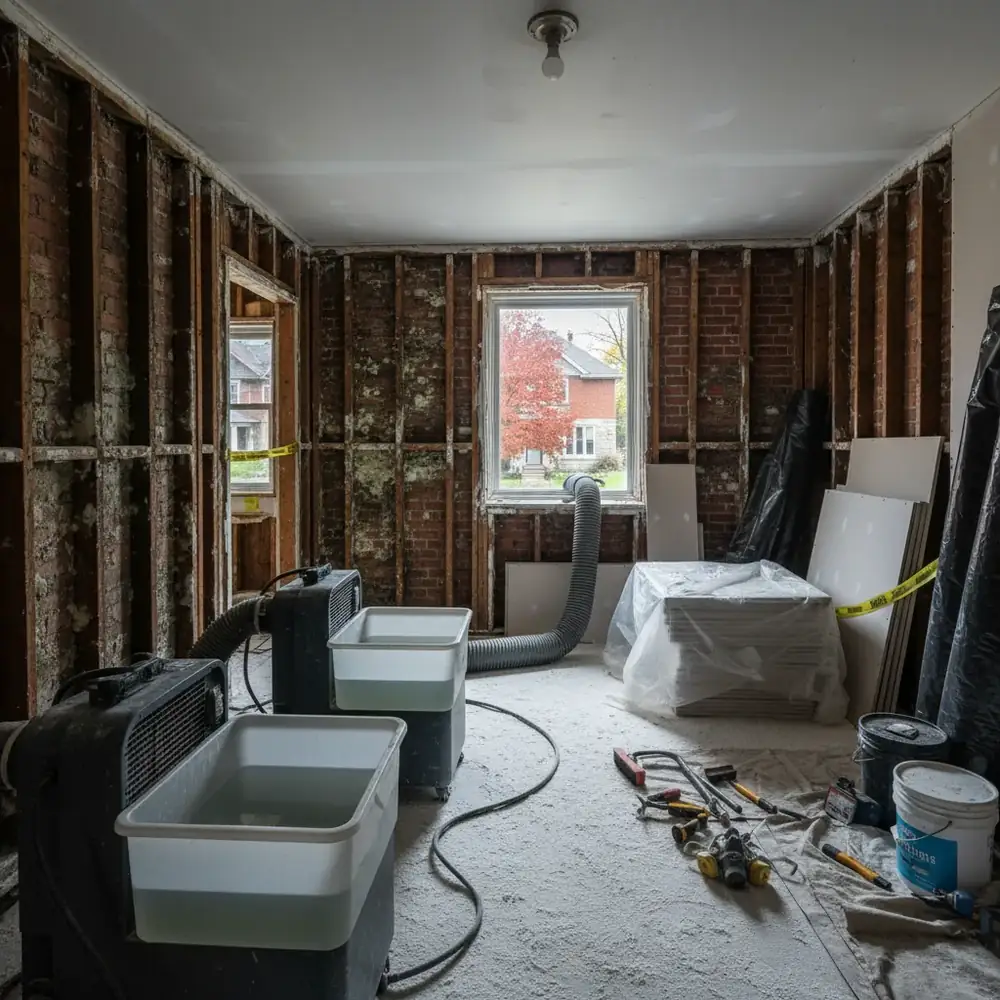
Almost every mould job is a water job that was never finished. A basement that flooded and got "dried" with a box fan, a slow leak behind a shower, a chronically damp stone foundation — six months later there's staining on drywall, a musty smell, and someone in the house with worsening allergies.
Proper remediation means containment (so spores don't spread through the house during the work), removal of colonized porous materials, HEPA vacuuming and damp-wiping of everything in the containment, and fixing the moisture source — otherwise it simply grows back.
- Poly containment with negative air pressure during all work
- Removal of colonized drywall, insulation and finishes
- HEPA air scrubbing and surface cleaning
- Moisture-source diagnosis so it doesn't return
What it costs in Guelph
- Small contained area (under 10 sq ft): $500–$1,500
- Single room / large closet: $1,500–$4,000
- Whole-basement remediation: $4,000–$10,000+
- Third-party air clearance testing available on request
Mould Remediation FAQs
Is black mould dangerous?
Colour doesn't determine toxicity — plenty of harmless moulds are black and some problem species aren't. Any significant indoor growth should be removed and its moisture source fixed, regardless of colour.
Can I just spray it with bleach?
Bleach whitens staining on non-porous surfaces but doesn't kill roots in drywall or wood, and the water in bleach can feed regrowth. Porous colonized material needs removal, not spraying.
How do I know if mould is behind my walls?
Musty odour with no visible source, staining that returns after painting, or a history of leaks/flooding in that area. A moisture scan plus a small inspection opening answers it definitively.
Will it come back after remediation?
Not if the moisture source is fixed — that's why source diagnosis is part of every job we do. Mould needs water; remove the water and it cannot return.